


Creative Mentorship in 2025: A Brief Overview of the Year Behind Us
In 2025, despite the many challenges our society continues to face, the Creative Mentorship team consistently continued to develop and expand its mission—to initiate, support, and inspire positive social change by empowering creatives, culture professionals, and other agents of change. Through mentorship, capacity building, networking, and cross-sector dialogue, Creative Mentorship actively supported individuals who, through their work and engagement, strive to bring about positive change in society, offering them space for growth, exchange, and mutual support.
Below is an overview of the key activities and programmes that marked the year behind us.
Creative Mentorship for Young Professionals
In 2025, a new cycle of the regional programme Creative Mentorship for Young Professionals was launched, aimed at young people working in the fields of art, culture, and creative industries across the Western Balkans. The open call attracted more than 100 applications from across the region, and following a careful and intensive selection process, 30 mentees were selected. The programme began with a two-day online Kick-off gathering in April, which laid the foundations for the mentoring process and regional networking among participants.
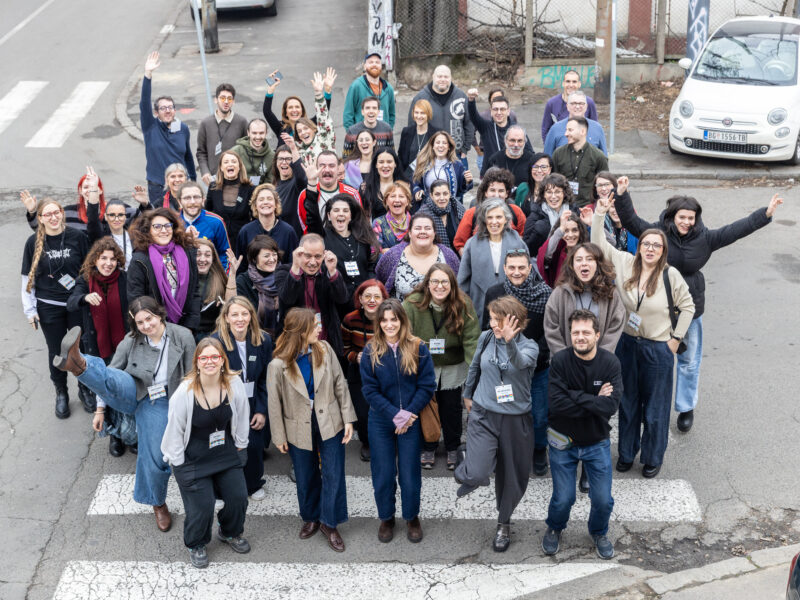
Throughout the year, the programme unfolded through an individual mentoring process, consultations, and educational workshops, with a strong focus on the personal and professional development of participants, knowledge exchange, and strengthening the regional network. A major milestone was the first in-person meeting — the Midterm Gathering held in October in Belgrade — which further strengthened relationships among participants and brought new momentum to the mentoring process.
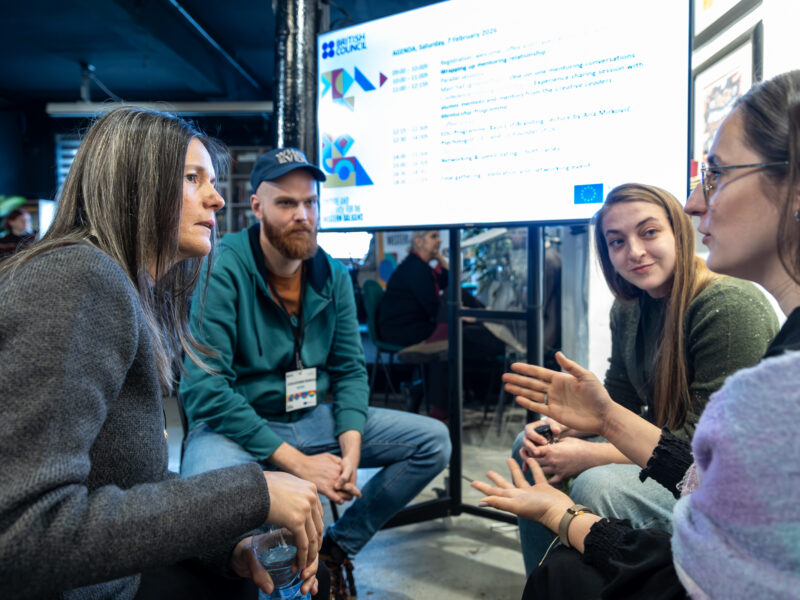
As part of the Midterm Gathering, on 18 October, a Creative Mentorship Network Gathering was held at Nova Iskra, bringing together current participants of the Creative Mentorship for Young Professionals programme alongside the wider Creative Mentorship community—alumni, donors, partners, media representatives, and friends of the organisation. This event enabled meaningful networking and exchange between the current generation of mentees and professionals from culture, arts, creative industries, media, and other sectors active in the region.
The final Wrap-up event is planned for the first week of February 2026 (6–8 February). This gathering will connect current programme participants with alumni of the previous Creative Leaders mentorship cycle. As part of the closing event, on Saturday, 7 February, a large Creative Mentorship Network Gathering will be organised, bringing together participants of the previous mentorship cycle for Creative Leaders, alumni, collaborators, partners, donors, and friends of the organisation. This gathering will be an opportunity to collectively mark the completion of another programme cycle, reflect on shared achievements, and open space for new collaborations and initiatives.
The Creative Mentorship for Young Professionals programme is supported by the British Council through the Culture and Creativity for the Western Balkans project, funded by the European Union.

The Bridge Mentorship Programme (Erasmus+ Music4Change)
From April 2024 to April 2025, the Creative Mentorship team implemented The Bridge mentorship programme, designed for doctoral and postdoctoral music students, as well as early-career professionals in the field from around the world. The programme was developed in response to a clearly identified need for support during the transition from academia to the professional labour market.
The Bridge is part of the Erasmus+ project Music4Change, which aims to improve the quality of doctoral education in music through innovative and interdisciplinary approaches, while also strengthening the role of the arts in sustainable development. The programme was grounded in the Creative Mentorship methodology and the principles of non-academic mentorship, which have proven to be a valuable complement to formal education and traditional academic mentoring.
During the programme, participants from 11 countries across four continents worked on developing their ideas and projects, while also strengthening personal skills and competencies relevant to their future professional paths. The exchange of diverse perspectives and experiences significantly enriched the mentoring process and contributed to a deeper understanding of how academic knowledge can be applied within broader social and professional contexts.
The Bridge mentorship programme confirmed that academic and practical work can exist in strong synergy—for the benefit of individuals, as well as institutions and the wider field of musical creation, research, and education. A short summary of the programme’s outcomes is available at this link.

Advisory and Honorary Board Gathering in Mokrin
The annual gathering of members of the Advisory and Honorary Boards of Creative Mentorship took place from 30 May to 1 June in Mokrin. This meeting represents an important part of the organisation’s strategic planning and long-term development, providing the team with space for knowledge exchange, reflection, and collective thinking about future directions.
The Advisory and Honorary Boards are composed of national and international experts in mentorship, cultural diplomacy, cultural management, cultural heritage, marketing, and related fields. Their continuous support, expertise, and engagement significantly strengthen the work and mission of Creative Mentorship. Throughout the year, board members also supported the team through individual consultations and meetings, contributing to the organisation’s activities and capacity development as needed.

Where Our Work Took Us
Over the past year, the Creative Mentorship team actively participated in numerous international and regional events dedicated to education, culture, and knowledge exchange. We took part in the conference Rethinking Interdisciplinarity and Innovation in Music Research in Thessaloniki, organised within the Erasmus+ Music4Change project, under which The Bridge mentorship programme was also implemented. On this occasion, Dragana Jevtić delivered an interactive workshop titled Mentorship in Action: How to Find Your Mentor – and Why It Matters, aimed at professors and students from music faculties across Europe, with the goal of highlighting the importance of non-academic mentorship.
At the end of September, we participated in the Culture and Creativity for the Western Balkans Networking Event in Sarajevo, where we established new contacts, initiated potential collaborations, and further strengthened existing partnerships in the region. During the same period, we visited the European Cultural Foundation in Amsterdam, where we held a mentoring and strategic meeting with Philipp Dietachmair, a member of the Creative Mentorship Advisory Board and a programme manager at the Foundation. This visit opened new perspectives and provided valuable guidance for the further development of our programmes and international cooperation.
In Zagreb, we attended the book promotion of Mentorica, authored by alumna and mentor Snježana Bahtijari, thereby supporting the work of our alumni and partner initiatives focused on strengthening mentoring practices among professionals. At the invitation of mentor Ivan Minić, we also took part in the DigiTalk conference in Niš, where we spoke about mentorship as a principle of lifelong learning and presented concrete examples of its application in media and marketing.
In addition, over the past year, we participated in the Assembly of the Independent Cultural Scene of Serbia in Novi Sad and Veliki Gaj, where, together with colleagues and partner organisations, we engaged in discussions on shared challenges and the future direction of this network, of which we are active and committed members.

Sharing Our Knowledge
Over the past year, Creative Mentorship continued its dedicated work on the decentralisation of knowledge and support, with a particular focus on local communities in Serbia. In September and October, we spent time in Kosjerić on two occasions, where we delivered workshops for young people as well as for representatives of organisations and associations working in the fields of culture, education, ecology, and inclusion.
Through conversations on how to find mentors and the workshop Developing Project Ideas, participants were offered practical tools for personal and professional development, as well as for strengthening initiatives that can be submitted to local, national, and international calls. The strong interest and active engagement of local stakeholders confirmed the importance of continuous capacity building and the presence of support beyond major urban centres.

How We See 2026
The year behind us brought change, struggle, and challenges, but also meaningful moments that reminded us why we do what we do and where we find its deeper purpose. For this reason, as a team, we focused on strengthening our adaptability and flexibility, striving to respond to the needs of the community at a time when support, understanding, and care were most needed.
We continued to consistently nurture and apply the values of solidarity and empathy, believing them to be the foundation of any sustainable and meaningful work. With this mindset, we enter 2026 with the hope that it will bring greater stability, peace, and space for shared learning and growth—so that together we can contribute to making the society we live in a better place.