


Creative Mentorship for Young Professionals: Programme officially Kicked Off
The Creative Mentorship for Young Professionals Programme officially began with a two-day virtual kick-off event held on April 12 and 13, bringing together participants from across the Western Balkans. This opening session served as both an introduction and a foundation for the year-long journey ahead.
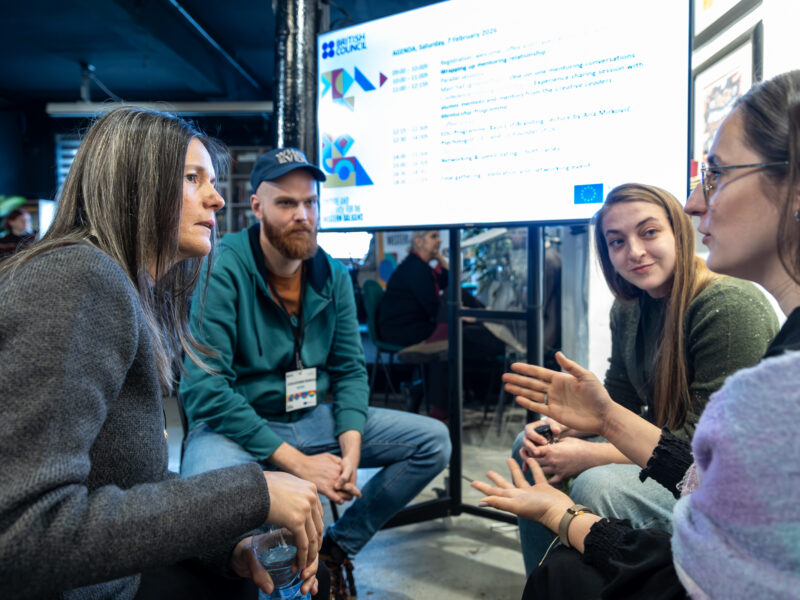
Throughout the gathering, participants explored the core principles of mentorship, including personal and professional growth, self-reflection, and the power of meaningful dialogue. Interactive exercises were designed to spark connection, build trust, and creativity, helping this diverse group of emerging professionals to begin building their community from day one.
Dragana Jevtić, founder and director of Creative Mentorship, along with programme manager Milena Đurđev, welcomed participants and introduced the structure and values of the programme. Over the next year, 30 mentees and 30 mentors from of arts, culture and creative industries will engage in one-on-one mentorship, peer learning, and collaborative exploration.
Despite the numerous challenges the region is facing currently, the Creative Mentorship team emphasized the importance of investing in individuals who are ready to drive change. Through mentoring, empowerment, education, and skill-building, the programme aims to provide a solid support system for young professionals who are shaping the future of the creative sector.
On the first day, Alma Vatres, grants manager representing the British Council, addressed the group and highlighted the significance of the initiative. The Creative Mentorship for Young Professionals Programme is supported by the British Council through the Culture and Creativity for the Western Balkans project and funded by the European Union.
Participants were encouraged to stay open, push their limits, and embrace new perspectives throughout the mentoring process. They were also reminded that success in mentorship is not just about outcomes—it’s about the quality of the relationship, the willingness to grow, and the mutual exchange of insight and support.
Mentorship as a Transformative Relationship: Workshop with Pamela von Sabljar
One of the highlights of the first day of the Kick-Off event was the sessions led by Pamela von Sabljar, international speaker, facilitator, author, and long-standing collaborator of Creative Mentorship. Drawing from her rich experience as both a mentor and mentee, Pamela shared insightful reflections on the power of relational and transformative mentorship, placing a strong emphasis on self-reflection, journaling, and authentic connection.
Pamela encouraged participants to step out of their comfort zones, reminding them that vulnerability is not a weakness, but a strength that fosters deeper human connection. Through her approach, she introduced the foundational principles of Creative Mentorship — mentorship that goes beyond transactional goals and taps into personal growth and mutual learning.
Gratitude, Desire, and Bragging Exercise
To illustrate the power of openness and presence in mentoring conversations, Pamela guided participants through a simple but powerful exercise. Each person was invited to take one minute to share three things with their mentorship partner:
- What they are grateful for,
- What they desire,
- What they would like to brag about (without false modesty).
Participants then moved into breakout rooms to share these reflections in pairs, setting the tone for more meaningful and honest conversations throughout the programme.
Pamela reminded participants that the key elements of a successful mentoring relationship include the courage to listen in order to truly understand, the willingness to create safe spaces for dialogue without the need to be right, the openness to learn from each other in every moment, and the importance of showing up authentically—first as humans, then as professionals. Sometimes, a single honest conversation can truly shift worlds.
Tools for Transforming Conversations
Pamela also shared several practical tools that mentors and mentees can use to build trust and openness throughout the mentoring journey:
- Trust the process – Be patient and curious. Growth takes time and presence.
- UnMASK – Be willing to show vulnerability, speak with honesty, and bring your authentic self into the relationship.
- TryTalk – Practice deep listening. Co-reflect with your mentor/mentee, share challenges, and grow together through shared exploration.
- Kindness Challenge – Invite others to grow, but do it with care, compassion, and encouragement.
- Embrace awkwardness and resistance – Discomfort often signals that something meaningful is happening. Dare to step outside your comfort zone and welcome the unknown.
This session served as an invitation for participants to reimagine mentorship — not just as a structured learning tool, but as a transformative experience grounded in trust, authenticity, and mutual respect.
A collective poem created during the group introductions, composed of lines shared by participants and curated by mentee Diona Kusari.
I’m not sure how to read my life
My hands are my art
We are all pieces of paper
My love for incontinuity gets in the way all the time
preservation of something valuable, that you hold sacred to your heart
Worth remembering you were a small particle of a unity
If you see a snake on the way, meet it with calm and patience
That’s how you create a connection
The multidimensionality of your identity
From the void came the gifts (of the cosmos)
We’re all celebrating diversity, and it’s never been more relevant
We just need to start something to get it finished
just people and meeting them where they are
leave room for big mistakes….

The work of mentee Miloš Janjić was created during the participant introduction session
Day Two of the Kick-Off: Sharing Experiences, Learning, and Open Conversations
On the second day of the Creative Mentorship for Young Professionals Programme launch, mentors and mentees had the opportunity to hear firsthand experiences from alumni of previous programme cycles. This part of the workshop focused on sharing practical insights and advice for mentors, while also offering a space for open dialogue about the dynamics of the mentoring relationship.
Alumni mentors reflected on how their own growth was shaped through mentoring, emphasizing that mentorship is a two-way street. They spoke about the importance of active listening and adapting to the evolving needs and goals of their mentees. One of the key lessons shared was that mentoring is not about offering ready-made answers but about creating a relationship based on trust, attentiveness, and mutual learning.
Alumni mentees shared how working with mentors helped them gain clarity, achieve concrete goals, make important professional decisions, and build greater confidence in their personal and professional lives. Alumni mentees also emphasized the importance of being open and honest, both with themselves and their mentors, throughout the process. Many shared how regularly revisiting and/or rechecking the goals set at the beginning of the programme was essential, not just for staying on track with their objectives, but also for ensuring continuous personal and professional growth. This approach, they noted, was key to achieving their goals and fostering ongoing development in all areas of life.
The Open Talk: The Western Balkans in 2025 – How to Live, Work, and Create
The second day of the Kick-Off continued with a powerful and heartfelt conversation titled The Western Balkans in 2025 – How to Live, Work, and Create. The discussion was moderated by Larisa Halilović, Chair of the Creative Mentorship Advisory Board, international development expert, and TEDx speaker. She was joined by fellow Advisory Board members Višnja Kisić and Tatjana Nikolić, as well as programme alumna Virdžinija Đeković Miketić.
This open dialogue was designed as a safe space for participants to reflect on how they navigate the complex social, political, and emotional realities currently shaping life across the Western Balkans.Through sharing and listening, they explored how uncertainty affects their daily lives and professional paths, as well as the ways they strive to preserve their mental and physical wellbeing. The conversation also emphasized the importance of community, dialogue, and solidarity as essential tools for resilience and transformation in times of challenge.
Many participants expressed the challenge of maintaining balance between their professional commitments, personal lives, and activism. The discussion opened up important questions about the models of solidarity we need today and whether previous approaches to social engagement still meet the urgency of our time. Issues of mental health, stress, and burnout surfaced as shared concerns—especially for those working in cultural and creative sectors where emotional labor is often invisible but deeply felt.
What made this exchange especially valuable was the sense of connection that emerged. People not only recognized each other’s struggles but also exchanged insights, coping strategies, and small practices that help them stay resilient.
These types of conversations are essential—not only to feel seen and supported, but to begin reimagining how we want to live and work moving forward.
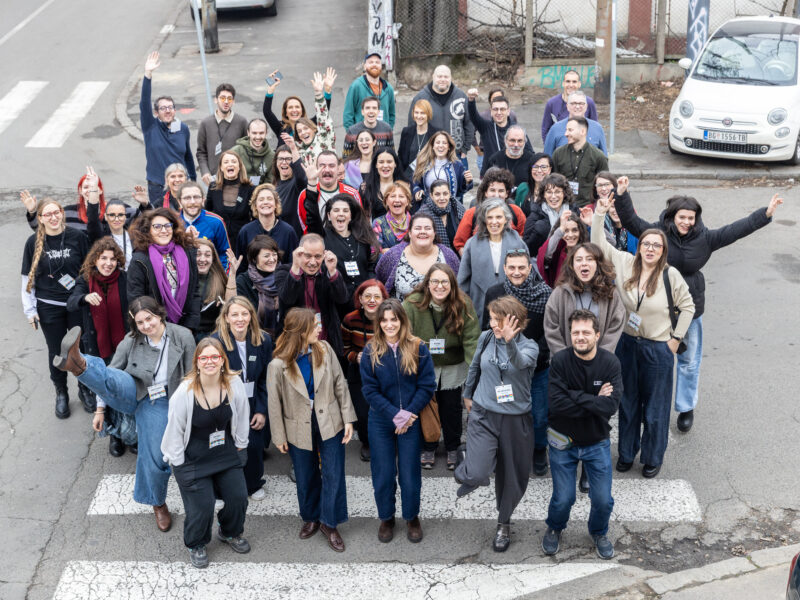
After a vibrant and meaningful weekend, we are energized and excited about what lies ahead with this extraordinary group of 60 professionals from across the Western Balkans. Over the next year, they will work together, grow through mentorship, and contribute to building more connected, inclusive, and creative communities in the region.