


Open Discussion Held: The Western Balkans in 2025 – How to Live, Work, and Create
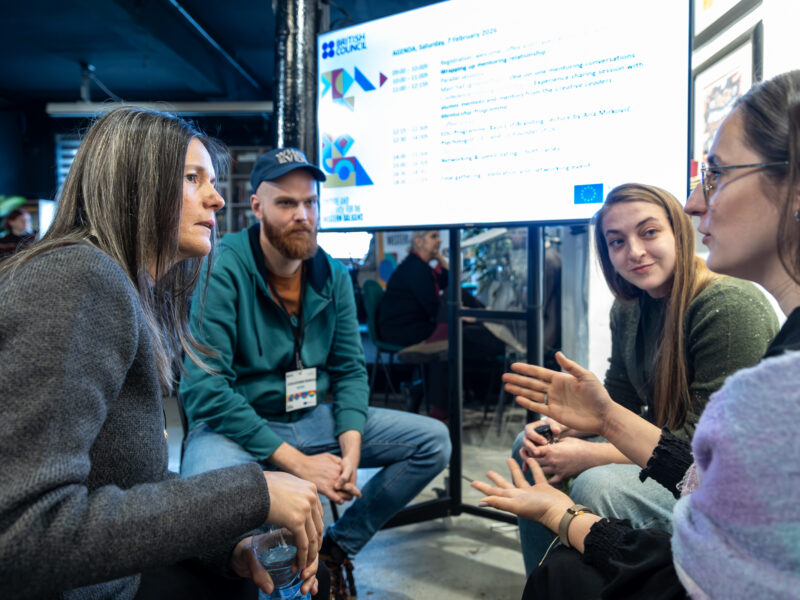
On the second day of the Kick-Off workshop within the Creative Mentorship for Young Professionals Programme, an open conversation titled The Western Balkans in 2025 – How to Live, Work, and Create was held with programme participants. The talk was moderated by Larisa Halilović, Chair of the Creative Mentorship Advisory Board, international development expert, and TEDx speaker. She was joined by fellow Creative Mentorship Advisory Board members Višnja Kisić and Tatjana Nikolić, as well as programme alumna Virdžinija Đeković Miketić. This conversation was held as part of the Creative Mentorship for Young Professionals Programme, supported by the British Council through the Culture and Creativity for the Western Balkans project and funded by the European Union. CC4WBs is a project funded by the European Union that aims to foster dialogue in the Western Balkans by enhancing the cultural and creative sectors for increased socio-economic impact.
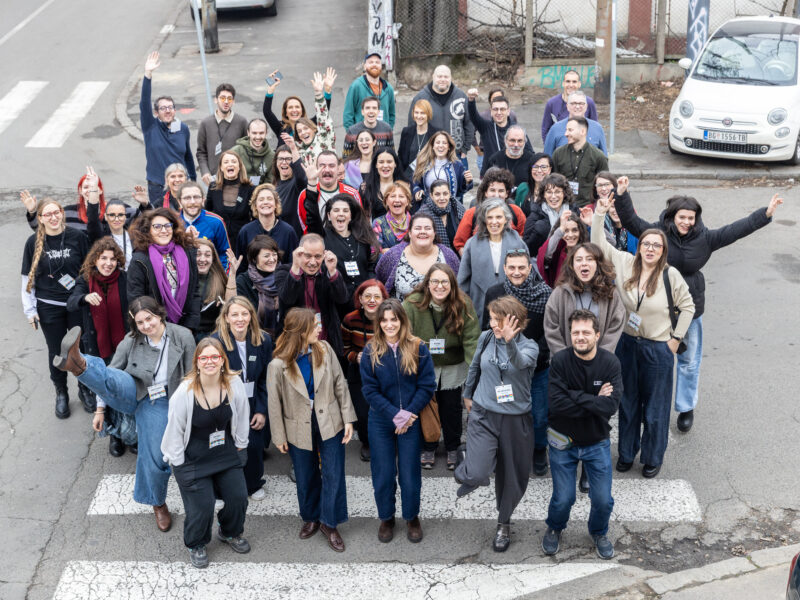
This conversation created a safe space for reflection, exchange, and mutual support. It offered participants a moment to pause, connect across borders, and reflect on the shared realities shaping life and work in the region. Participants joined from across the Western Balkans, including Tirana, Skopje, Novi Sad, Sarajevo, Mitrovica, and many other places, offering a wide range of voices and perspectives. Together, they explored how they navigate the present and imagine the future they want to help build through dialogue, collective care, and active contribution.
Facing Sociopolitical Challenges in the Arts and Culture Sector
Participants spoke about the emotional and professional challenges that artists, cultural workers, and creative professionals face in the current sociopolitical climate. Many shared feelings of frustration, anger, and helplessness, brought on by continuous crises and instability. Balancing personal life, professional responsibilities, and activism often feels overwhelming. While some choose to carry on with their work as a form of resistance, others have stepped back to preserve their mental health. The conversation highlighted the urgent need to rethink traditional models of solidarity and reflect on whether past approaches to social engagement are still effective today.
Media and Activism Under Pressure
The discussion also focused on the struggles faced by independent media, activists, and cultural workers across the region. Participants reflected on the challenging and often unsafe conditions under which they operate. Despite this, the group emphasized the importance of radical solidarity and maintaining focus on shared goals as key strategies for staying resilient in demanding environments.
Resilience and the Power of Community
Despite difficult realities, the group also expressed determination and hope. The conversation underlined the importance of reclaiming public spaces, challenging dominant narratives, and maintaining trust within communities. Participants emphasized that resilience today means being both professional and compassionate, pragmatic and idealistic. Culture and art remain vital tools—not only for personal survival but also for sparking change and helping society imagine and build a better future.
A Recommendation for Personal Resilience and Sustainable Engagement
The participants of the conversation shared not only their observations about the challenges they face, but also deeply personal messages about art, community, and hope. During the session, mentees and mentors spoke about the importance of creating space for sharing, expression, and empowerment.
One of the participants, Ekaterina Namicheva Todorovska from North Macedonia, highlighted the power of art as a means of connection: Art is a bridge. Use it to reach others who feel the same but don’t have the words yet. Ekaterina advises her students to use their emotions—grief, anger, anxiety, exhaustion—not as blocks, but as brushstrokes, rhythms, words, or movement: Even if it’s just a sketch, a phrase, or a voice memo—let it be real, not perfect. Send a message, share a work-in-progress, or tell someone you see them. That one gesture could be the light they need.
Mentor Andreja Koršič from Serbia thanked all participants for their authenticity and courage to be vulnerable, stating: Thank you to everyone, for your full humanity and vulnerability. Open to next open talks and joint actions. It is a privilege to be a part of a group of people who are dedicated to envisioning a world resembling all of us.
Joreld Dhamo from Albania reminded everyone of the importance of unity in times of crisis:
We should all understand the power of coming together and being a constant pressure to decisions that affect us.
Virdžinija Đeković Miketić from Serbia emphasized the importance of networks and bridges already built: I think that we need to use the channels and bridges that we made before to spread the word, to share feelings, thoughts, and ideas for new models of political and emotional solidarity. We know how to make space for that; we know how to organize people, how to encourage them for hope.
These messages speak to the need for new models of solidarity, as well as the power of art, collective action, and mutual support in a time that demands both courage and care.
In times of constant pressure and uncertainty, it is essential to find ways to take care of ourselves in order to stay present, engaged, and capable of long-term action. Maintaining personal resilience doesn’t mean giving up the fight—in fact, it’s how we stay in it.
Regular mental health care, limiting time on social media, physical activity, spending time in nature, and nurturing relationships with loved ones are all practices that help us stay grounded, focused, and connected. It’s important to allow ourselves to not feel okay sometimes, without guilt. Some days are simply harder than others—and that’s okay.
At the same time, we must not forget the importance of social engagement. Whether it’s supporting the community, standing in solidarity with students, volunteering, or contributing in other ways, it’s crucial to make space for action where we feel we can make the biggest impact. Equally important, however, is recognizing our limits and giving ourselves permission to rest—we can’t be present everywhere, all the time.
What we are experiencing is not a temporary crisis—it is a prolonged state of emergency that calls for extraordinary measures. That’s why adaptation, mutual support, and collective care are essential. We believe that not only can we survive, but we can live. Together.