

From Ideas to Impact: Understanding Project Logic in Cultural Work
How does a project move from an inspiring idea to meaningful change? A recent session within the Creative Mentorship for Young Professionals Educational Programme explored how cultural professionals can connect vision, activities, and real-world impact through clearer project thinking.
In the cultural and creative sectors, projects have become almost a universal language. Festivals, exhibitions, educational programmes, publications, and collaborations are often developed within project frameworks, shaped by public calls, grant applications, and donor expectations.
But what actually makes a project meaningful?
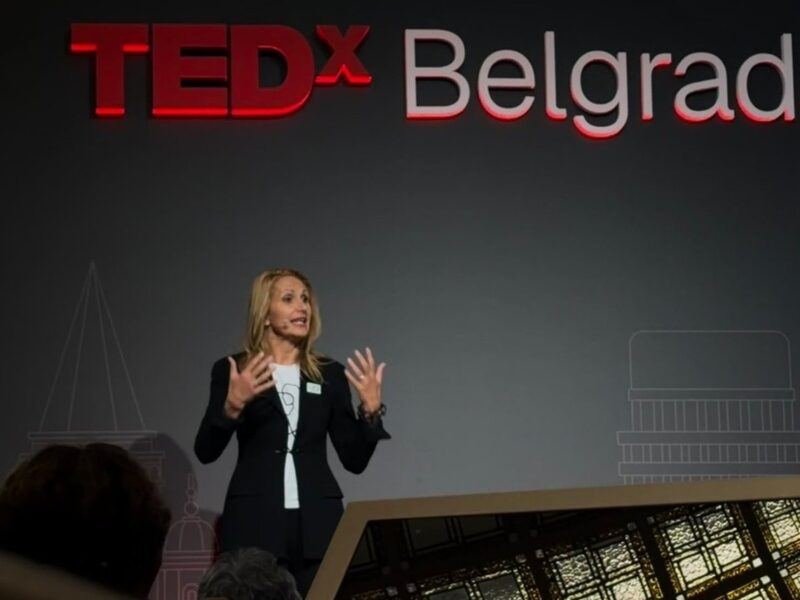
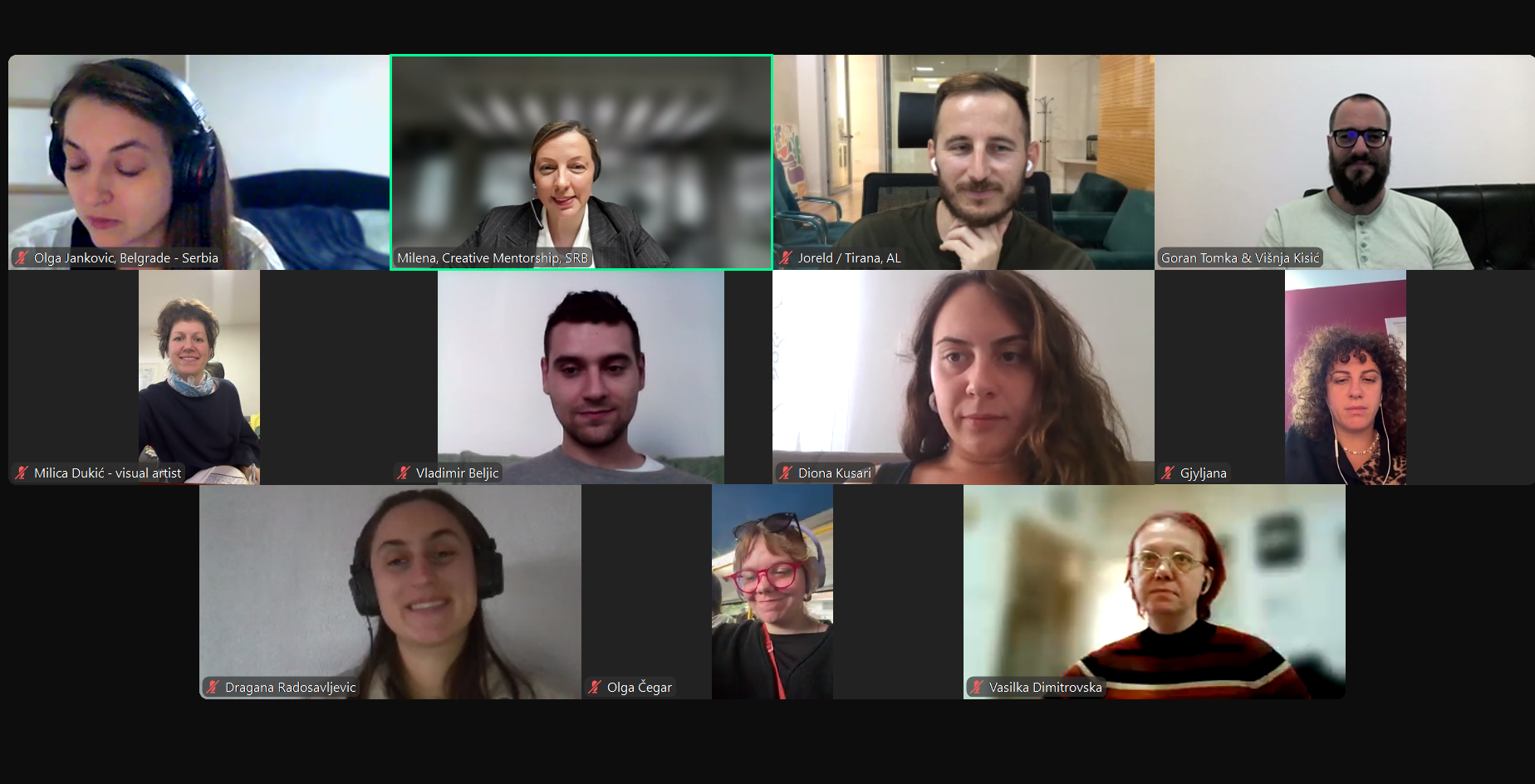
This question guided the online workshop “Project Logic”, organised as part of the Educational Programme of the Creative Mentorship for Young Professionals Programme. The session led by Dr Višnja Kisić and Dr Goran Tomka, researchers and cultural policy experts, explored how cultural practitioners can move from loosely defined ideas toward structured projects capable of creating measurable social change.
Thinking Beyond Activities
One of the key insights discussed during the workshop was the need to shift the way we think about projects. Too often, proposals begin with a list of activities: a workshop, an exhibition, a conference, a training session. Yet project logic invites a different starting point.
Goals first, then activities.
Before defining what we will do, we need to understand what change we want to create and why that change matters.
Participants were encouraged to ask a fundamental question that lies at the heart of any strong project proposal: What change will this project bring to the world around us? Whose lives will it improve? Only once this question becomes clear can activities begin to make sense.
This shift, from activities to outcomes, is central to what is known as project logic, a systematic approach used across most public calls for proposals and funding programmes.
The “Missing Middle”
Another important concept discussed during the workshop was what practitioners often call the “missing middle.”
Projects frequently jump directly from activities to ambitious long-term goals without clearly explaining how one leads to the other. For example, how exactly does organising a workshop contribute to broader social cohesion, cultural participation, or community resilience.
Understanding this connection, between what we do and what changes as a result, is essential for developing credible and meaningful projects. In project logic frameworks, this space is usually articulated through results and indicators, which help translate ideas into measurable outcomes.
This approach not only strengthens project proposals but also helps organisations become more accountable to the communities they work with.
Seeing Projects from the Donor’s Perspective
Another practical insight shared during the workshop was the importance of occasionally putting on a different “hat” – thinking like a donor evaluating the proposal.
From this perspective, clarity becomes crucial. Vague intentions or inspirational language may not be enough. Funders often need to understand how a project will measure its impact, how resources will be used, and what tangible results can be expected.
This does not mean reducing culture to numbers alone. Cultural work often deals with intangible values, creativity, artistic sensibility, participation, and social connection, that are difficult to measure. Yet the challenge lies precisely in translating these values into a structure that makes sense to those supporting the work.
Learning from Experience
The workshop also offered a more personal perspective through the experiences of two alumni mentees from the Creative Leaders Mentorship Programme.
Marija Rakić Šaranac, Librarian at the Local Heritage Department of the Public Library “Vuk Karadžić” in Kragujevac, shared her journey from writing her first Erasmus+ project proposal to successfully implementing a project that received 85 out of 100 points in evaluation. She reflected on how mentorship support and professional guidance helped her develop the skills needed to shape project ideas, structure proposals, and communicate them effectively.
Marija Krečković Gavrilović, Board Director of the Neozoik Foundation, emphasized the role of professional networks in making projects possible. Through connections established within the Creative Mentorship community, she began collaborating on a project developed together with the Public Library “Vuk Karadžić” in Kragujevac, focused on cultural heritage preservation and educational activities for children.
This collaboration offered a powerful reminder that behind every project logic matrix and funding application stands something much more human: trust, shared ideas, and the willingness to work together.
Beyond Project Logic
At the same time, the workshop also addressed important critiques of the project-based system itself.
Project funding has brought valuable opportunities to the cultural sector, but it has also introduced challenges, from the precarious nature of short-term funding cycles to the growing pressure to translate artistic and social processes into measurable deliverables.
Participants explored emerging alternatives that seek to balance accountability with flexibility. These include participatory grant-making models, trust-based funding approaches, and more flexible forms of financial support that recognise the complexity of cultural and social work.
Rather than rejecting project logic entirely, the discussion encouraged participants to see it as a tool, one that can be used thoughtfully while remaining attentive to the realities and values of cultural practice.
Projects Are Ultimately About People
In the end, the workshop returned to a simple but often overlooked insight: every project revolves around people.
Behind every proposal, indicator, or activity plan lies a community, a group of collaborators, or a set of individuals whose lives the project hopes to touch in some way.
Understanding project logic therefore does not mean becoming more bureaucratic. On the contrary, it can help cultural practitioners clarify their intentions, strengthen their ideas, and ensure that the projects they design truly contribute to meaningful social and cultural change.
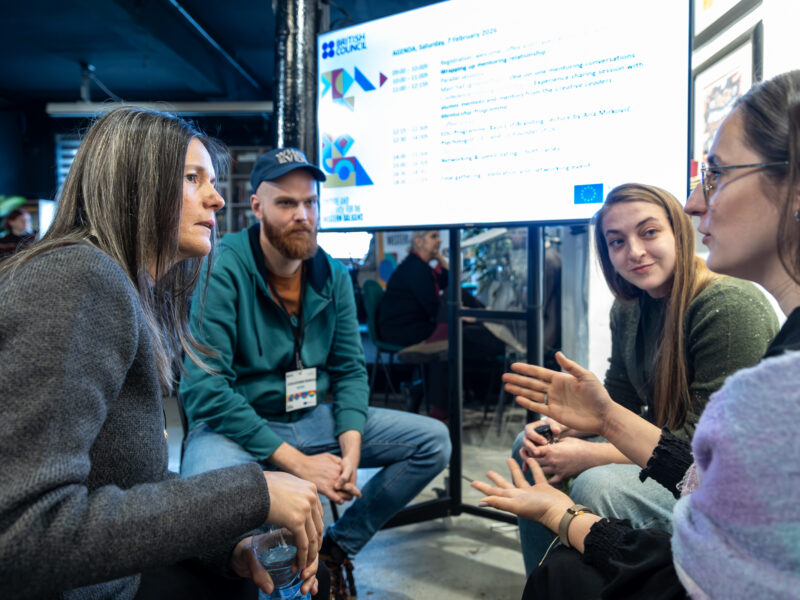
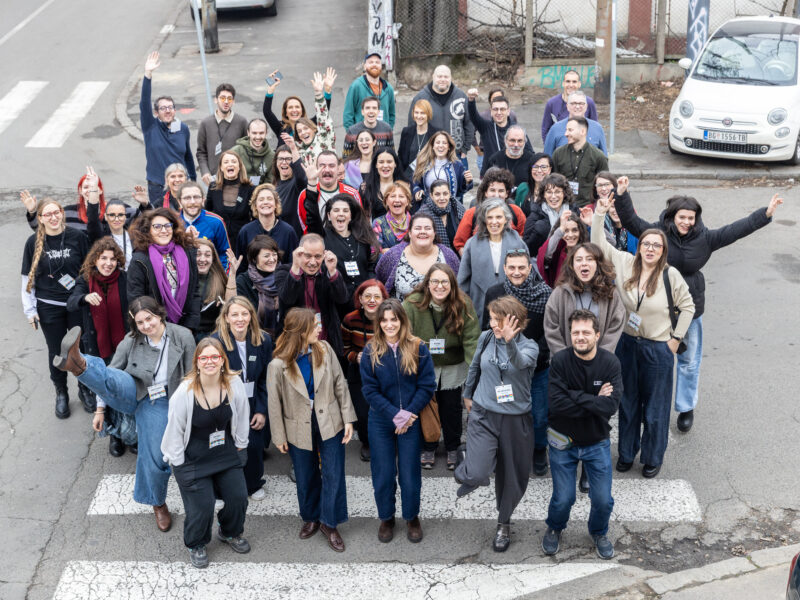
Within the Creative Mentorship for Young Professionals Educational Programme, workshops like this one create space for emerging professionals to reflect on their work, exchange experiences, and develop practical tools that support their long-term professional growth.
In practice, project logic is not about filling in templates or learning the language of funding calls. At its best, it is a way of clarifying intentions: understanding the problem we are addressing, the people we are working with, and the change we hope to see. When cultural professionals approach projects in this way, proposals become narratives of change, structured yet flexible frameworks that help ideas travel from imagination to impact.
The Creative Mentorship for Young Professionals Programme is supported by the British Council through the Culture and Creativity for the Western Balkans (CC4WBs) project, funded by the European Union. #CC4WBs aims to foster dialogue in the Western Balkans by enhancing the cultural and creative sectors for increased socio-economic impact.