


Creative Mentorship Hosts Its First Conference: “With a Mentor, It’s Easier!”
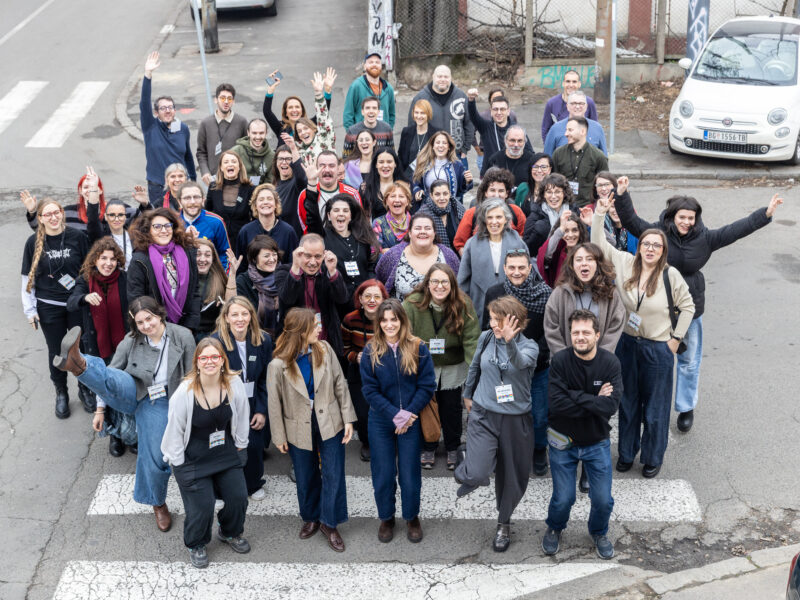
On November 26, 2024, at the Artget Gallery in the Cultural Center of Belgrade, the first-ever conference dedicated to mentorship in culture, arts, creative industries, and media was held under the title With a Mentor, It’s Easier!, organized by Creative Mentorship. More than 100 participants gathered to engage with the conference program, which featured two panel discussions, a speed networking session, testimonials from Creative Mentorship programme alumni, and a segment where foreign cultural centers, embassies, and other mentorship programs in Serbia presented their current open calls and projects. Attendees had the opportunity to learn more about these initiatives through direct conversations following the presentations.
Dragana Jevtić, director and founder of Creative Mentorship, opened the conference by addressing the audience, reflecting on how both the world and Serbia were vastly different when the idea of Creative Mentorship was first conceived. She emphasized that the conference itself, along with the number of attendees, stands as further proof of the importance of the organization’s work and the necessity of mentorship in today’s world. Dr Višnja Kisić, eco-culturalist and co-founder of Creative Mentorship, and dr Tatjana Nikolić, cultural manager and researcher, as well as a member of the Creative Mentorship Advisory Board, echoed these sentiments. They highlighted the growing need to share knowledge, experiences, and support among professionals in the cultural and artistic fields.

Following the opening remarks by the Creative Mentorship team, the segment Mentorship Stories from the Perspective of Mentors and Mentees – Get Inspired! took place. Alumni of the mentorship program—Maša Seničić, Iva Plemić, Iva Čukić, Jovana Simovski, Marija Kojić, and Maja Lalić—shared their experiences, emphasizing how mentorship, regardless of one’s official role as a mentor or mentee, can profoundly impact one’s life and professional journey. They reinforced the idea that mentorship is always a two-way process—regardless of one’s position in the mentor-mentee relationship, there is constant learning, growth, and development. Participation in the Creative Mentorship programme, they noted, has been an invaluable and transformative experience for them.

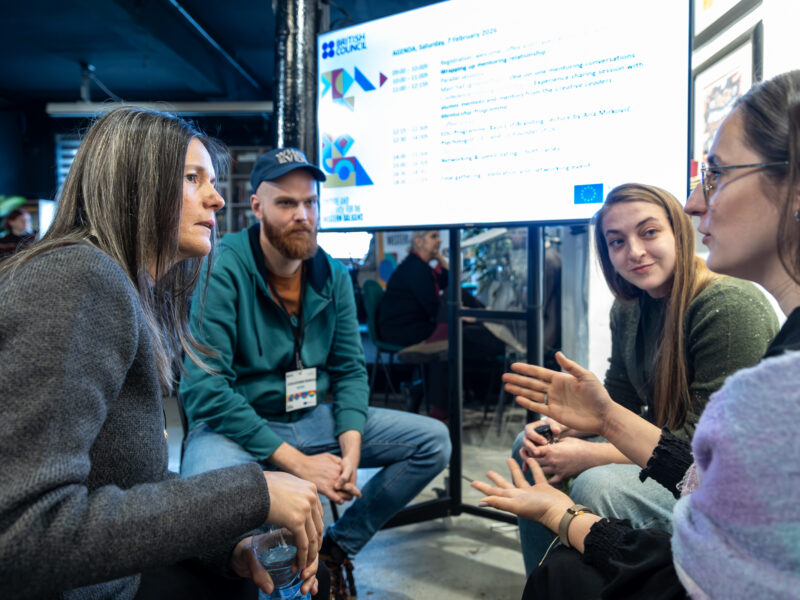
To give all attendees a firsthand experience of mentorship, a speed networking session was held in the foyer of the Artget Gallery before the first panel. Participants who had previously been part of the Creative Mentorship programme took on the role of mentors, while those without prior experience in mentorship programs acted as mentees. This session not only facilitated faster and more meaningful connections among conference participants but also provided everyone with a condensed yet insightful glimpse into the value that mentorship can offer.

The first panel, What Does Mentorship Do in Culture?, featured representatives from the civil sector, academia, private sector, and diplomacy: Ivana Jovanović Arsić, cultural worker; Milena Dragićević Šešić, professor and activist; Helene Larsson Pousette, curator and facilitator; and Nela Tonković, art historian and curator at the Contemporary Gallery in Subotica. The panel was moderated by Višnja Kisić, eco-culturalist and co-founder of Creative Mentorship.
When asked what mentorship means to them, the panelists highlighted key concepts such as support, knowledge exchange, horizontality, trust, dedication, and energy transfer. Milena Dragićević Šešić pointed out that knowledge transfer within academic circles is often rigidly structured, whereas informal mentorship offers both personal and professional support, fostering genuine interaction where both mentors and mentees can learn significantly from each other.

Helene Larsson Pousette shared how her first mentee taught her that it is possible to be a mentor despite the challenges that come with the role. She emphasized that while it is not always comfortable to face mentees’ questions that push one to think beyond existing frameworks, this process is invaluable.
Ivana Jovanović Arsić reflected on how having a mentor from another country introduces an entire “baggage” of cultural and social contexts that can be absorbed through mentorship.
Nela Tonković spoke about the importance of collaboration between the public and civil sectors in culture. She also shared how mentorship helped her recognize her place in the local cultural scene, recalling a powerful message from her mentor: “It’s not about where you stand, but what you say.”
Ivana Jovanović Arsić shared how her mentor helped her realize that no change happens outside of one’s comfort zone—an insight that continues to guide her career today.
To conclude the panel, Helene Larsson Pousette emphasized the importance of the network of people and the support system built through the activities of Creative Mentorship, stressing that these connections do not end when the program officially concludes. According to her, it is the people within the Creative Mentorship network, as well as the audience present at the conference, who drive change—they are the ones who carry the message forward, act as advocates, and form a crucial group working toward a better society.
Milena Dragićević Šešić added that mentorship is essential for empowering professionals in the cultural sector, as it provides a space for discussions on professional ethics, information exchange, and self-reflection. Helene concluded that mentorship teaches us how to live together in the future, while Nela highlighted that mentorship allows us to reimagine ourselves and our work—one of its greatest values.
New Opportunities, New Possibilities
The New Opportunities, New Possibilities segment of the conference was dedicated to presenting relevant projects focused on informal education and support in culture, the arts, and the broader social context. During this session, attendees had the chance to learn about initiatives from embassies, foreign cultural centers, other mentorship programs, and international organizations that aim to foster creativity, collaboration, and development in the cultural industries.

Representatives who shared insights about projects and open calls at the conference included:
- Slavica Marković-Sandić, Public Diplomacy, Private Sector, and Sweden Promotion Coordinator at the Embassy of Sweden in Belgrade
- Ana Swedmark Westin, Program Director of Creative Partnerships at the Swedish Institute
- Karin Dalborg, Executive Director of NÄTVERKSTAN KULTUR AB (SVB)
- Marija Bjelopetrović, Director of the American Resource Center
- Bojana Ristić, Project Manager of CC4WBs at the British Council
- Renata Radeka, Regional Coordinator of a UNESCO project
- Anđelika Ranijeli, Project Manager of the AICS component within the EU CC4WBs program at the Italian Agency for Development Cooperation
- Karolina Sotta, Cultural Attaché at the French Institute in Serbia and Head of the Teatroskop regional performing arts program
- Ivana Jovanović Arsić, Cultural Worker from Kulturis Association and the Independent Cultural Scene of Serbia (NKSS)
- Ivana Ristivojević, Project Manager at the European Movement in Serbia
- Dragana Tomić Pilipović, Expert in Social Innovation and Rural Community Development, as well as HRM&OD Mentor/Trainer at Rural HUB Vrmdža and CDOP.
Following this segment, the conference continued with Unpacking New Opportunities, a session where attendees had the chance to meet representatives from foreign cultural centers, embassies, other mentorship programs, and international organizations. This part of the event provided participants with detailed insights into projects, open calls, and opportunities previously presented in the New Opportunities, New Possibilities segment. Designed as interactive short sessions, this format enabled direct communication with key stakeholders, fostering discussions focused on potential collaborations, empowerment, and identifying pathways for further support and joint initiatives.


Mentorship as a Valuable Tool for Women’s Personal and Professional Empowerment
The second panel, titled Mentorship as a Valuable Tool for Women’s Personal and Professional Empowerment, was moderated by Lana Nikolić, a media professional and activist. The discussion featured: Kristina Janković Obućina, Executive Manager of SGA; Svetlana Stefanović, Executive Director of BFPE for a Responsible Society and Tisa Čaušević, Public and Regulatory Affairs Manager at Coca-Cola HBC.
The panelists shared practical advice for women considering mentorship—both those looking for a mentor and those interested in becoming one.
Svetlana Stefanović emphasized the importance of learning to ask for help, conversations, or mentorship, as many people assume that potential mentors are too busy or unwilling to share their knowledge. She also noted that mentorship taught her the skill of active listening, which has significantly improved her communication in both personal and professional settings.
Kristina Janković Obućina shared her experience from the video game industry, where a strong culture of knowledge-sharing exists, and where openness to exchanging experiences leads to remarkable results.
Tisa Čaušević highlighted that mentorship culture is well-developed in the corporate sector, which is particularly encouraging for young women at the beginning of their careers.
When asked what they have gained from mentorship, the panelists agreed that the most valuable gift they received was self-confidence. They also emphasized that mentorship is always a two-way process, where mentors often gain as much as, if not more than, their mentees. Additionally, they noted that mentors can provide crucial guidance in answering questions such as “What do I want?” or “How do I achieve this?”, but also pointed out that the timing for entering a mentorship relationship is just as important as the relationship itself.
Tisa Čaušević shared how her participation in the Creative Mentorship programme, where her mentor was the then-Ambassador of Denmark to Serbia, provided her with unwavering trust and a structured framework that significantly contributed to her personal and professional growth. Kristina Janković Obućina concluded that a mentor is often the only person to whom one can openly express thoughts that cannot be shared with others. Meanwhile, Svetlana Stefanović emphasized that some of the most beautiful experiences in her life happened precisely because of mentorship.
Tisa Čaušević added that one of the most valuable lessons she gained from her mentorship experience within the Creative Mentorship programme was learning to ask questions without hesitation.

The conference With a Mentor, It’s Easier! was supported by the U.S. Embassy in Serbia, the Swedish Embassy, the company Medicon, and the Cultural Center of Belgrade. Additionally, the panel Mentorship as a Tool for Women’s Empowerment received support from Coca-Cola HBC Serbia.
The diversity of participants and sectors represented at the conference contributed significantly to the richness of perspectives and ideas—not only during the moderated panels but also in informal discussions throughout the event. Participants came from a variety of professional backgrounds:
- 18.4% from the civil sector
- 12.3% from the state sector
- 13.2% from academia
- 21.9% from the private sector
- 30.7% freelancers
- 3.5% from the diplomatic sector
This broad representation created a dynamic exchange of knowledge and experiences, fostering cross-sector collaboration.
The conference brought together professionals from 17 cities and places, including Belgrade, Novi Sad, Trstenik, Mladenovac, Kikinda, Aranđelovac, Zrenjanin, Veliko Gradište, Vrmdža (Sokobanja), Samobor, Knjaževac, Čačak, Kosjerić, Sarajevo, Kraljevo, Užice, and Bujanovac. This geographic diversity strengthened the event’s national and regional impact, connecting cultural sector professionals from across Serbia and beyond.
By bringing together representatives from different sectors and locations, the conference facilitated the exchange of best practices, a deeper understanding of community needs, and valuable networking opportunities. This highlights the crucial role of such events in fostering collaboration, inspiring new partnerships, and enhancing the cultural landscape.
Foto: Vladimir Opsenica