

Rethinking Cultural Work Today
A recent workshop within the Creative Mentorship for Young Professionals Educational Programme invited participants to reflect on how the cultural and creative sectors can move beyond sustainability checklists and begin rethinking the deeper relationships between culture, society, and the planet.
What does it mean for cultural work to become truly ecological? Is sustainability simply a matter of reducing energy consumption and recycling materials—or does it require something deeper: a shift in the way we think about growth, responsibility, and our relationship with the world around us?
These questions were at the heart of the workshop “Cultural Work – From Greening to Ecological Turn,” held as part of the Educational Programme of the Creative Mentorship for Young Professionals Programme.
The session was led by Dr Višnja Kisić and Dr Goran Tomka, researchers and cultural policy experts who have long explored the intersections of culture, sustainability, and social transformation. Their lecture invited participants to step back from day-to-day project realities and consider a broader context in which cultural work unfolds today.
Understanding the “Polycrisis”
The workshop opened with a reflection on what many scholars now describe as a “polycrisis”—a situation in which multiple global crises unfold simultaneously and reinforce one another. Climate change, pollution, economic inequality, political instability, and militarization are not isolated problems but interconnected dynamics shaped by deeper social and economic structures.
“The ecological crisis is not only an environmental issue—it is deeply connected to the social, economic, and cultural systems we live in.”
Participants were encouraged to consider how cultural production is embedded within these wider systems. As the lecturers emphasized, environmental degradation is not only an ecological issue but also a question of justice and inequality, since those who contribute least to environmental damage are often the ones most affected by its consequences.
Rethinking Growth and Progress
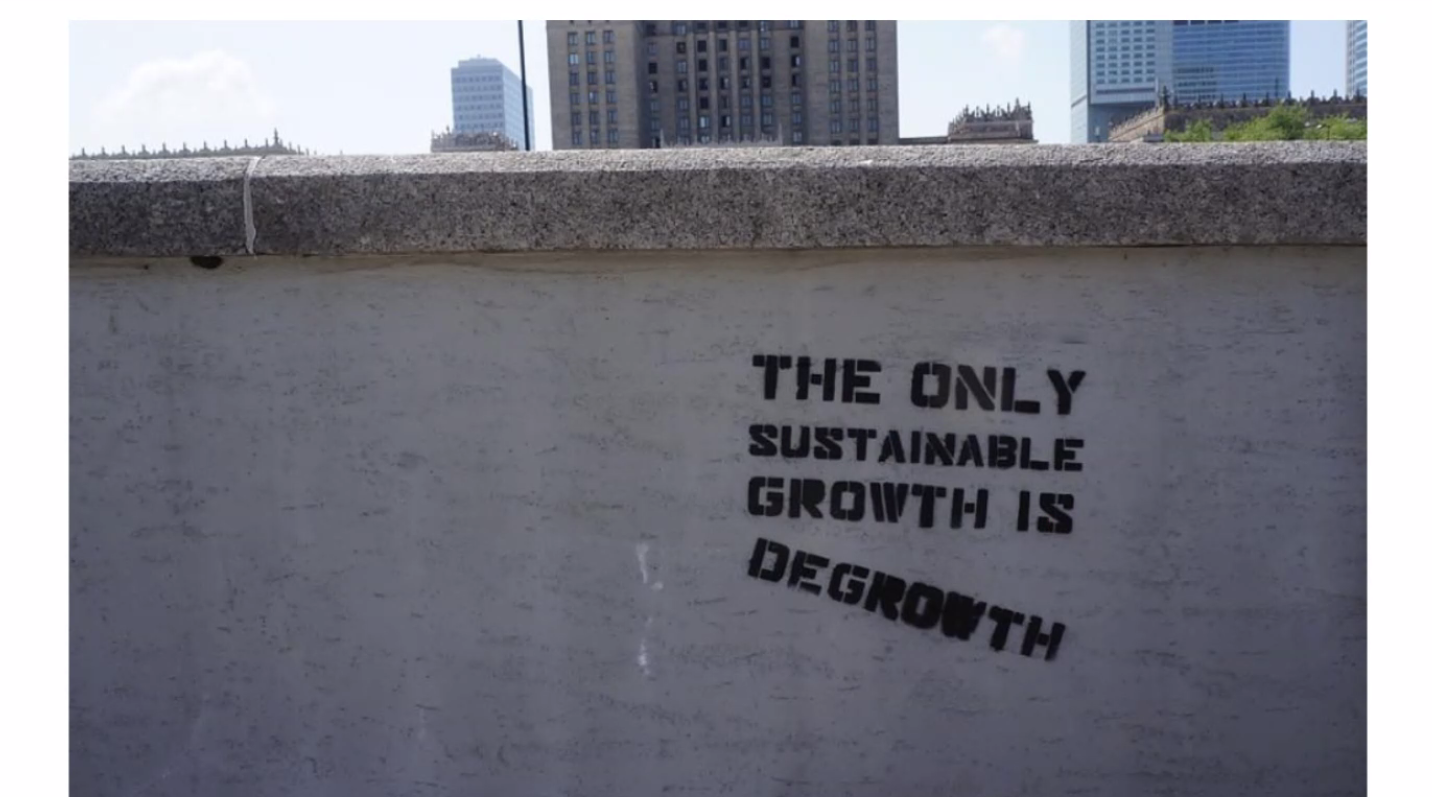
A key idea discussed during the workshop was the concept of degrowth—an approach that questions the dominant belief that progress must always mean expansion, consumption, and economic growth.
Degrowth invites us to imagine wellbeing differently: not as endless accumulation, but as a balanced relationship between human activity and the limits of the planet. Within cultural work, this perspective opens space to rethink production models, travel patterns, institutional expectations, and even the pace at which projects are created.
The discussion also challenged the long-standing divide between culture and nature, encouraging participants to consider relational perspectives that emphasize interdependence, care, and responsibility toward all forms of life. These ideas draw on eco-feminist thinking, indigenous knowledge systems, and emerging approaches that place care and reciprocity at the center of social and cultural life.
From Awareness to Practice
While the conceptual framework was broad and philosophical, the workshop also offered practical entry points for cultural organisations and creative professionals who want to begin working more sustainably.
Participants were introduced to a simple yet effective sequence of actions often used in sustainability planning:
- Measure the environmental impact of activities such as energy use, travel, materials, and waste.
- Avoid unnecessary consumption or emissions wherever possible.
- Reduce what cannot be avoided.
- Replace harmful practices with more sustainable alternatives.
- Offset only the remaining impacts.
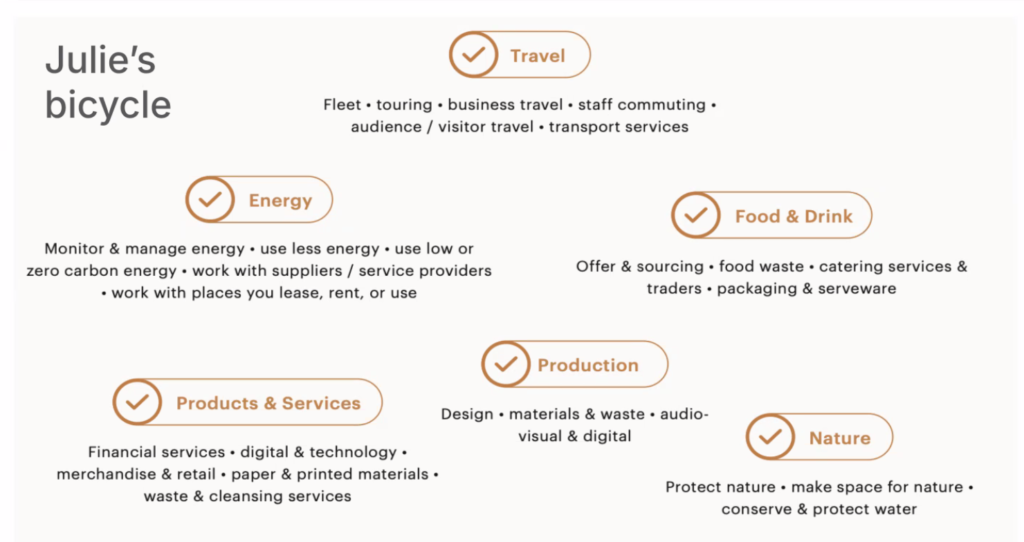
This approach, widely used in sustainability toolkits for the cultural sector, encourages gradual transformation rather than sudden radical change. Tools such as carbon footprint calculators and platforms like Julie’s Bicycle can help cultural organisations understand and monitor their ecological footprint more systematically.
“Sustainability in culture begins with awareness—reflecting on how our work, processes, and materials shape the world we share.”
Culture as a Space of Transformation
Art and culture have always reflected the world we live in. Today, however, they are increasingly called upon not only to mirror reality but to imagine alternatives.
In this sense, the ecological turn in culture is not limited to technical measures or environmental policies. It also involves rethinking organisational models, forms of collaboration, and the values that shape cultural production itself—from extractive relationships toward more regenerative and caring ones.
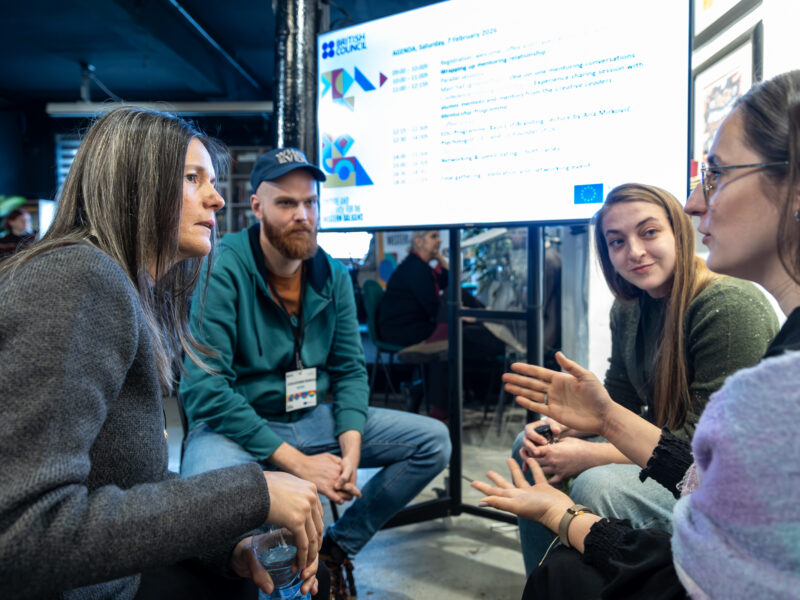
For participants of the Creative Mentorship for Young Professionals Programme, the workshop offered both inspiration and practical guidance. It created space to reflect on how creative practices—from festivals and exhibitions to media projects and performances—can gradually align with broader ecological responsibility.
The conversation made one thing clear: the transition toward sustainable cultural work is not a single step or checklist, but an ongoing process of learning, questioning, and collective imagination. Perhaps the most important takeaway from the workshop was this: the ecological turn in culture does not begin with grand strategies or perfect solutions, but with a shift in awareness. When cultural workers begin to rethink how their projects, institutions, and everyday practices relate to the living world around them, new possibilities for more caring, regenerative futures start to emerge.
Within the Creative Mentorship for Young Professionals Educational Programme, workshops like this one create space for precisely such conversations, where emerging professionals can explore complex questions together, exchange perspectives, and rethink how their work connects to the wider social and environmental realities of our time.
The Creative Mentorship for Young Professionals Programme is supported by the British Council through the Culture and Creativity for the Western Balkans (CC4WBs) project, funded by the European Union. #CC4WBs aims to foster dialogue in the Western Balkans by enhancing the cultural and creative sectors for increased socio-economic impact.