



Making Numbers Work for Ideas: Understanding Financial Project Management in EU-Funded Projects
Behind every successful cultural project lies not only a strong idea, but also a clear and responsible financial structure. A recent session within the Educational Programme as part of the Creative Mentorship for Young Professionals Programme explored how cultural professionals can navigate the financial logic of EU-funded projects.
For many professionals working in the cultural and creative sectors, the financial side of project implementation can feel intimidating. Budgets, reporting rules, eligibility criteria, and administrative requirements often appear far removed from the creative ideas that initially inspired the project.
Yet financial management is not simply a technical obligation. When understood well, it becomes a tool that helps projects remain transparent, sustainable, and accountable to both funders and communities.
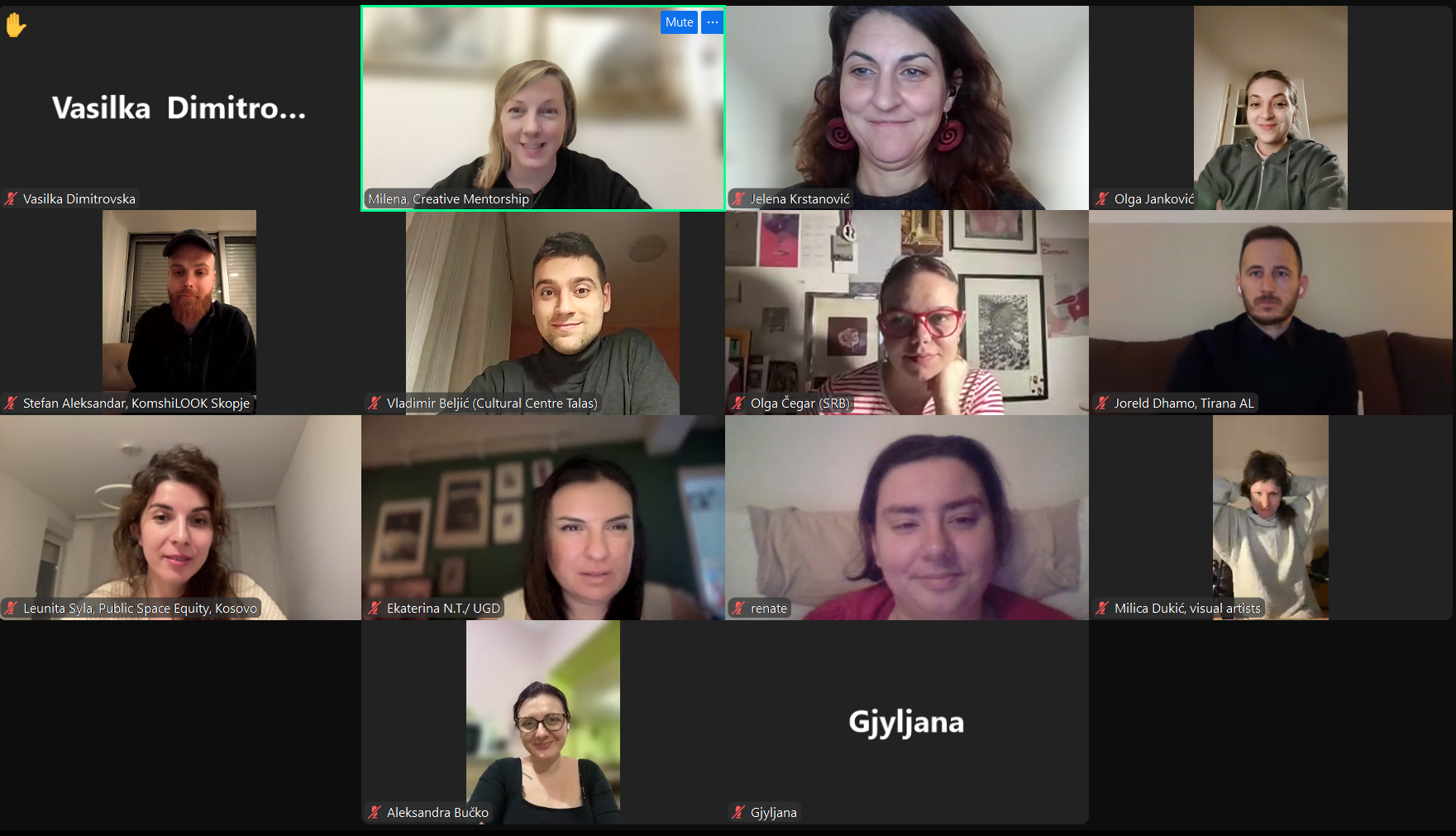
These questions were explored during the session “Financial Project Management in EU-Funded Projects,” led by Jelena Krstanović, Financial Manager of Creative Mentorship and cultural producer, within the Educational Programme of the Creative Mentorship for Young Professionals Programme.
The session offered participants a practical overview of how financial planning functions in European projects, from understanding budget structures to navigating the systems through which funding is administered.
Starting with the Portal
One of the first steps in accessing European funding opportunities is understanding the EU Funding & Tenders Portal, the central platform through which organisations apply for most EU programmes.
Participants learned how organisations register on the platform and obtain their Participant Identification Code (PIC) which is a unique identifier required for submitting project proposals and participating in EU calls.
Understanding Budget Logic
A significant part of the session focused on the two main budget models commonly used in EU programmes.
Some projects operate through lump sum budgets, where funding is linked to the successful delivery of agreed results rather than detailed reporting of every expense. In these cases, the focus shifts from receipts to demonstrating that project milestones and outputs have been achieved. Other programmes still rely on actual cost budgets, where organisations must document every eligible cost through invoices, contracts, or payroll documentation.
Understanding the difference between these two models is essential for designing a project that aligns with the expectations of the funding programme.
What Makes a Project Budget Work
Participants were also introduced to the main cost categories typically used in EU-funded projects. These include personnel costs, travel and accommodation, direct activity costs, operational expenses, subcontracting, and financial support to third parties.
While these categories may initially appear purely administrative, they are closely connected to how projects function in practice. A well-structured budget reflects the project’s work plan, its partners, and the resources required to deliver meaningful outcomes.
One important principle highlighted during the workshop was that funders rarely accept large unexplained numbers. Instead, every budget line must clearly show how the total amount is calculated, usually through the formula: number of units multiplied by the unit cost.
This level of clarity not only helps evaluators understand the proposal but also strengthens internal project management once the project begins.
Planning Before the Project Begins
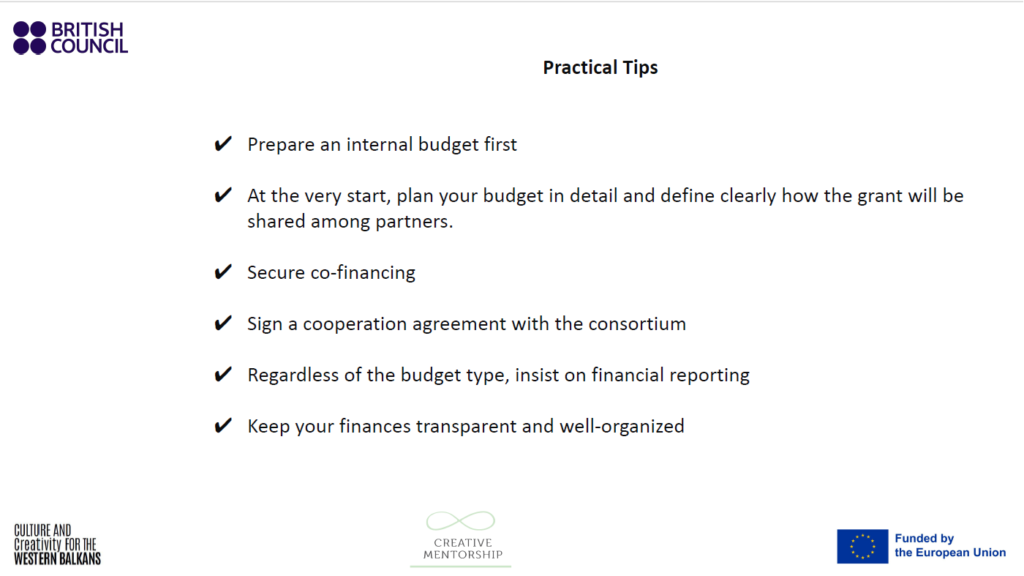
The workshop also emphasised the importance of early preparation. Before submitting an application, project teams should ideally develop an internal budget, agree on how funds will be distributed among partners, and clarify responsibilities through cooperation agreements.
Equally important is planning for co-financing, since many EU programmes require organisations to contribute a portion of the project budget through their own resources or additional funding sources.
Financial Management as Part of Cultural Practice
For professionals working in the cultural and creative sectors, financial management is often seen as something secondary to artistic or programme development. Yet the session demonstrated that responsible financial planning is inseparable from the long-term sustainability of cultural initiatives.
Transparent budgeting, careful documentation, and clear financial structures make it possible for creative ideas to travel from concept to implementation while meeting the expectations of international funding frameworks.
Ultimately, good financial management does not limit creativity, it helps ensure that ambitious cultural projects can actually take place.
The Creative Mentorship for Young Professionals Programme is supported by the British Council through the Culture and Creativity for the Western Balkans (CC4WBs) project, funded by the European Union. #CC4WBs aims to foster dialogue in the Western Balkans by enhancing the cultural and creative sectors for increased socio-economic impact.