

Creative Work in the Age of AI
As artificial intelligence rapidly enters creative industries, from marketing and design to architecture and media, understanding how these technologies shape creativity, authorship and professional roles is becoming increasingly important for cultural and creative professionals.
Artificial intelligence has quickly moved from the realm of science fiction into everyday reality. From writing assistance and image generation to urban planning tools and complex data analysis, AI systems are increasingly becoming part of how ideas are developed, projects are designed, and creative work is produced.
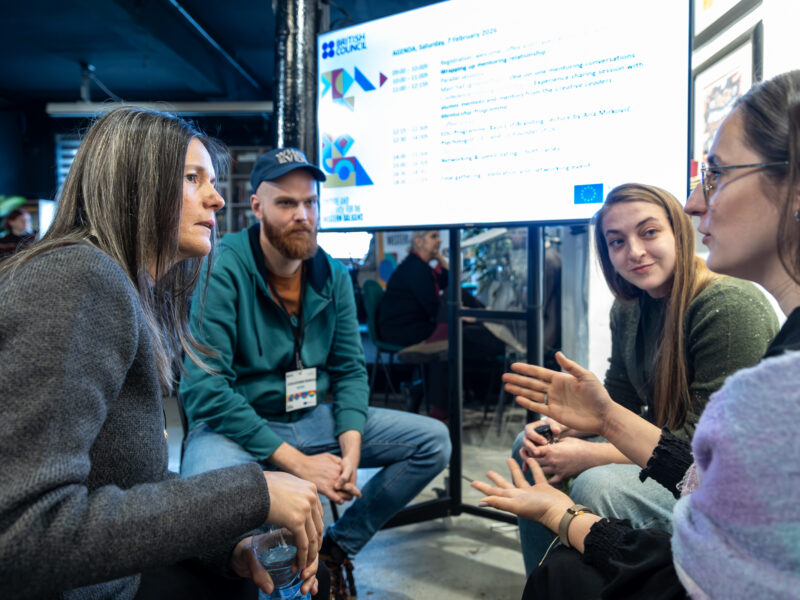
These questions were explored during the session “Creativity, Originality, and Functionality in the Age of AI,” held as part of the Educational Programme of the Creative Mentorship for Young Professionals Programme.
The lecture was led by Veljko Golubović, Executive Creative Director at New Moment Belgrade, psychologist and AI psychology researcher. Drawing on his experience at the intersection of creative industries, communication, and emerging technologies, Golubović guided participants through the evolving relationship between artificial intelligence and human creativity.
The discussion looked at how the development and application of AI are already reshaping the cultural and creative sectors, from the way ideas are generated and projects are conceptualised to the practical workflows of marketing, design, architecture, media production, and other creative professions.
One of the key topics was the impact of AI on the job market. While certain tasks may become automated, entirely new professional roles are already emerging, roles that require new forms of digital literacy, interdisciplinary thinking, and the ability to collaborate with technological systems. For many professionals working in creative sectors, this moment represents not simply a technological shift but a reminder of the importance of continuous learning and adaptation.
The conversation also addressed the often overlooked environmental dimension of AI. Training and running large-scale AI models requires significant computational power, which in turn demands large amounts of energy and natural resources. At the same time, AI is also increasingly used in initiatives aimed at improving environmental sustainability, from monitoring forests and biodiversity to optimising energy systems in cities.
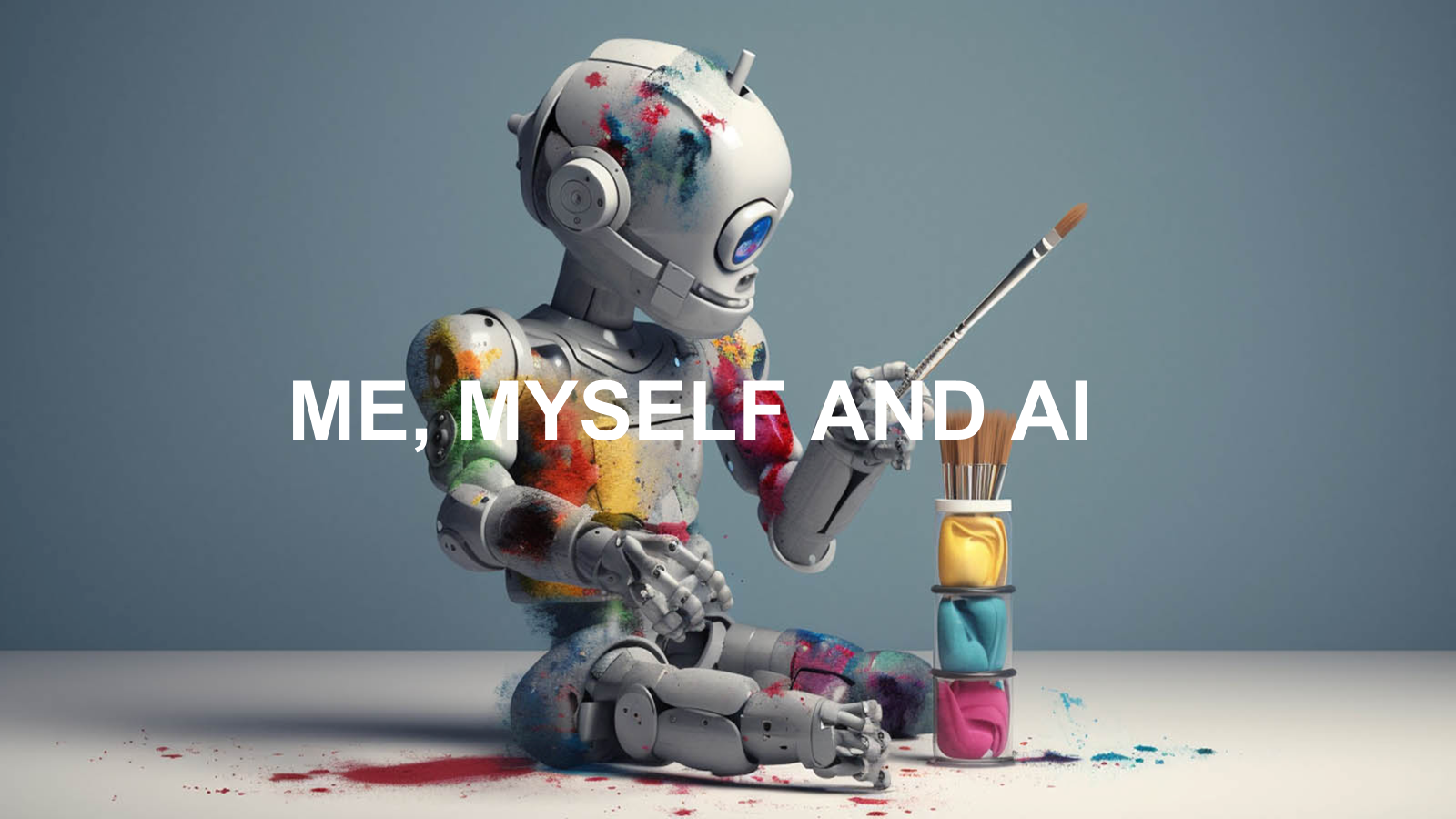
For participants working in creative fields, one of the most engaging parts of the session focused on how AI tools are already entering creative processes. Experiences with tools such as ChatGPT and Midjourney illustrated how artificial intelligence can support idea generation, basic content development, and early-stage research.
At the same time, the discussion emphasized that technology alone cannot replace the human capacity for interpretation, context, and critical judgment, qualities that remain essential in artistic and cultural production.
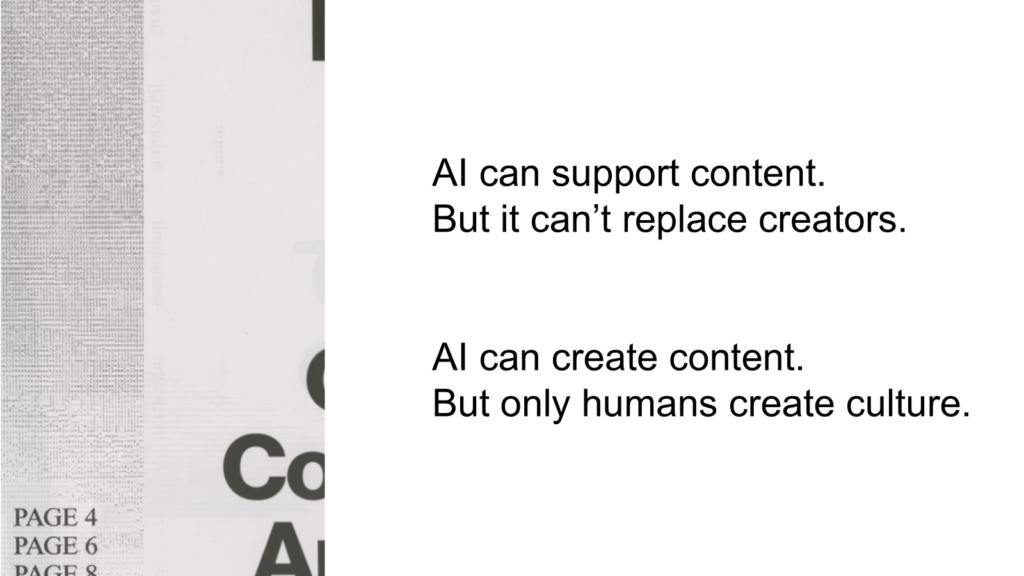
In areas such as marketing and communication, AI can assist in structuring strategy documents or generating large volumes of content, yet it still struggles to produce genuinely original ideas. Meanwhile, in fields like video production, architecture, and urban planning, emerging AI tools are beginning to reshape workflows and expand the possibilities for experimentation and design.
These developments inevitably raise deeper questions about authorship, authenticity, and the purpose of creative work. What remains distinctly human in a creative process increasingly supported by machines? Where does inspiration end and automation begin?
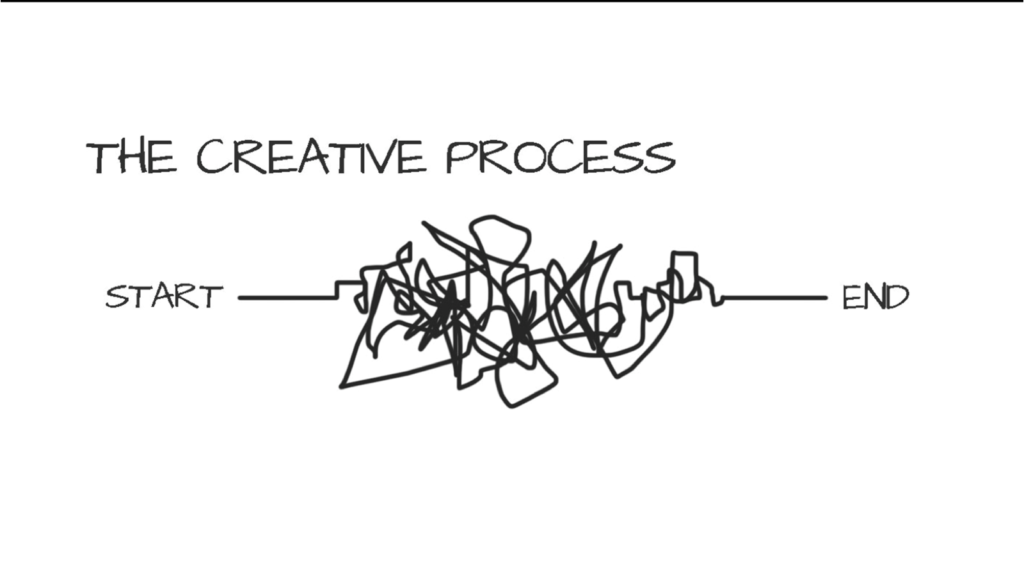
During the session, participants reflected on how AI tends to follow predictable and linear patterns, while human creativity often emerges from intuition, experimentation, and unexpected connections. Rather than replacing human imagination, AI may ultimately become a tool that expands the ways in which creative professionals think, prototype, and collaborate.
Equally important were the ethical questions surrounding artificial intelligence, from bias and misinformation to the broader societal implications of technologies that increasingly influence how information is produced and consumed.
For professionals working in cultural and creative sectors, this means engaging with AI critically rather than passively, understanding its possibilities while remaining attentive to its limitations.
Ultimately, the session suggested that the future of creativity will likely not be defined by a competition between humans and machines, but by the quality of collaboration between them.
In a world where algorithms can generate images, text, and ideas within seconds, the most valuable skill may remain profoundly human: the ability to ask meaningful questions, connect ideas in unexpected ways, and imagine futures that technology alone cannot foresee.
The Creative Mentorship for Young Professionals Programme is supported by the British Council through the Culture and Creativity for the Western Balkans (CC4WBs) project, funded by the European Union. #CC4WBs aims to foster dialogue in the Western Balkans by enhancing the cultural and creative sectors for increased socio-economic impact.